credit to: ECU repairer http://mrgears.50webs.com/ECU2.htm
ENGINE CONTROL UNIT (ECU) & DO-IT YOURSELF ECU REPAIRS
Throughout the past 15 years I’ve been a business associate and close mate of Chris, from Meek Automotive. In this time, I have been asked by numerous people in the industry including Chris to write an article about the repair and restoration of ECU’s (and other vehicle computer based control systems). The reasons for these requests are varied and numerous; yet all required something that would assist, show, demonstrate and one hopes, explain a number of things, in particular; -
If you own a Mitsubishi vehicle model between 1989 and 1994, why you should get the capacitors changed.
Why it’s probably not that wise to do it yourself and furthermore why your average TV repairman can’t do it.
And in addition what happens when you try to put a “Chip” in and things go wrong !*#!^
If you own a Mitsubishi vehicle model between 1989 and 1994, why you should get the capacitors changed.
Big Bang Theory

Figure 1. Mitsubishi TR Magna 1991 ECU after “Big Bang”
(Hybrids IC110 & 111 removed for clarity)
In Figure 1. is what remains of a Magna ECU that didn’t have it’s capacitors changed. Note the large diode that normally sits in the middle of the board and third capacitor have been completely disintegrated (Refer to Figure 4 below). This is what can happen to ALL Mitsibishi ECU’s & TCU’s manufactured between 1989 & 1994, local & import. Unfortunately for the customer they didn’t know about the problems until too late. The ECU was damaged beyond repair and the customer was charged over $2000 for a genuine replacement (in 2000)
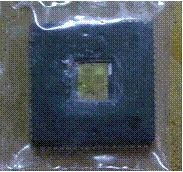 Figure 2. Mitsubishi GSR Lancer 1992 Main Processor after “Big Bang”
 Figure 2. shows what else can happen when “Big Bang” happens. In this case the owner of the vehicle had a funny ‘electrical and fishy’ smell in his car for weeks and didn’t get it attended to when finally “Big Bang” occurred. In this case the damage to the circuit board was not as bad as in Figure 1. but the Processor shown above had completely blown its top. These are some of the more extreme cases of what can happen, but don’t be fooled by ‘a little bit of damage’. Seven out of ten ECU’s that had blown processors only had minimal capacitor damage, yet the processor (which does all the work) had been destroyed completely, rendering the ECU unable to be repaired.
No, you just cant go down to your Dick Smith or Jaycar and buy replacements, these are custom made chips made for Mitsubishi Automotive by Mitsubishi Electronics and were never available as spare parts.
Why you shouldn’t try to do it yourself and why your average TV repairman can’t do it!
No disrespect to TV repairmen, oops sorry TV repair persons, they are experts in there field and are knowledgable about how to repair TV’s and other AV equipment. When it comes down to it, if your TV packs it in on you, you aren’t 150Km from the nearest point of call and your whole life isn’t thrown into turmoil because it won’t switch on. The same can’t be said for when your car stops. The inconvenience of a car that won’t run and having to put up with the public transport system (if it will get you to where you need to go, when you need to get there), or bumming a lift with family or friends, ain’t fun. Just shows the cost of a “cheap” repair to an ECU can be quite expensive.

A close up of the ECU shows some of the damage done by not properly repairing the ECU.
As you can see the transistor array has completely blown apart.
Figure above shows what can happen when short cuts are taken in the repair. In figure, it can be seen that the capacitors have been replaced and the job was done neatly but what happened after the ECU was put back into the car. Unfortunately for the owner there was still a fault that remained undiagnosed by the person who diligently replaced the capacitors.
*add-on
**credit to Bart, mivec.co.nz

Capacitors that need to be replaced are marked in red. This is a MIVEC 1G 7035 ECU, and location of the parts varies between models but most Mitsi ecu's look similar. You want to replace these parts with ones rated to 105degs, not the regular 85 deg ones that are originally fitted. Be VERY careful not to damage the tracks when removing the parts, they can be quite tricky to get out if you don't know what your doing. Just for interest, the memory that holds the ECU software is marked in green and whats replaced when an ECU is 'chipped'.

 I've posted about this stuff before which can be reached here, but this time, I had the privilege of doing it to my ecu. Let me recall back the issue; if you owned a Mitsubishi car especially those 90's model, do take care of the capacitor in the ecu. Those caps are freaking vital such as vital as heart in human body. Do take note that Honda P30 ecus also exposed to this fragility too. One main reason is because, the capacitors used by the manufacturer were electrolyte type which uses an ionic conducting liquid as one of its plates. As this cap ages, so the body construction a.k.a the casing too. When a faulty capacitor is charged, the liquid-based electrolyte becomes unstable and breaks down, producing hydrogen gas. Since these types of capacitors are sealed in an aluminium casing, the pressure builds up within the capacitor until either the flat metal top of the capacitor begins to bend, or the rubber sealing plug is pushed down. Eventually the pressure exceeds the strength of the metal casing and venting occurs. When an electrolytic capacitor bursts, the acidic electrolyte will going to spill on the circuit board which eventually will further damage to the ecu.
 There are 4 caps in 4G92 MIVEC ecu. When my ecu guru tested the caps, only 3 of them needs replacement while the other one seem perfectly working. A main reason why that one particular cap is still in mint condition is because it only regulate 5-volt connection while the other three were involve in higher voltage; 12V to be precise. The higher the voltage, the greater the strain the caps have to handle.


